Clean air plays a crucial role in plant tissue culture and pharmaceutical technology development, and is the core foundation for ensuring experimental success, product quality, and production safety. Although the application scenarios in the two fields are different, their core logic is the same: maintaining a sterile or controlled environment by controlling airborne microbial and particulate pollution.
Here's a breakdown of the role of clean air in these two key areas:
Ⅰ. The key role in plant tissue culture
Plant tissue culture is a technology in which plant explants (such as stem tips, leaves, etc.) are inoculated into artificially prepared medium for culture under sterile conditions. Clean air is the first line of defense against pollution.
1. Reduce microbial contamination rate (core pain point)
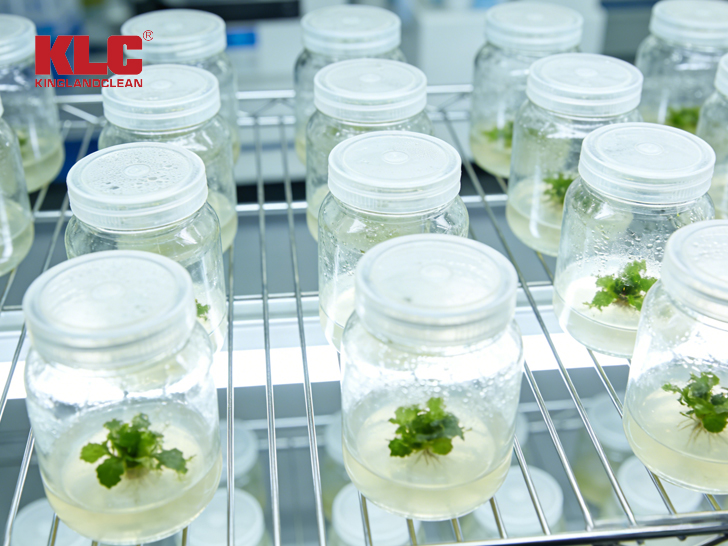
The current situation is grim: According to statistics, the microbial contamination rate in plant tissue culture is as high as 15%-40%, of which bacterial contamination accounts for about 80%, followed by fungal contamination. Once contaminated, it will not only lead to the scrapping of the current batch of seedlings, but may also spread to the entire culture room, causing huge economic losses.
Airborne pollution: Airborne fungal spores (e.g., Penicillium, Aspergillus niger) and bacterial spores are the main sources of pollution. If these particles settle on the medium or explant incision, they will multiply rapidly at the right temperature and humidity.
The role of clean air:Blocking the transmission pathway: The high-efficiency air filtration system (HEPA or ULPA) removes particulate matter ≥ 0.3 μm in the air, directly cutting off the aerosol transmission path of fungal spores and bacteria.
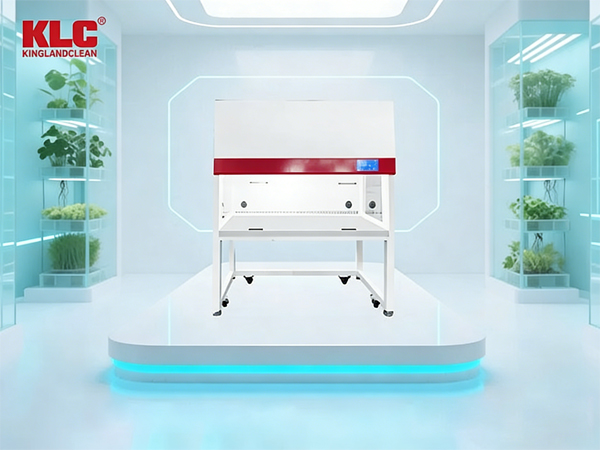
Laminar flow clean bench efficiency: In inoculation operations, laminar flow clean benches rely on clean laminar air to form an "air barrier" to protect the operating area from external environmental interference. If the air intake is not clean, even if the wind speed reaches the standard, the sterility effect cannot be guaranteed.
2. Ensure the growth quality and genetic stability of tissue culture seedlings
Hidden pollution prevention and control: Some endophytes or low-concentration microorganisms may not immediately cause turbidity of the culture medium, but they will secrete toxins or compete for nutrients, inhibit plant cell division and differentiation, and lead to slow growth, deformity and even death of tissue culture seedlings. Clean air minimizes this hidden pollution.
Reliability of experimental data: In scientific research experiments, variable interference caused by air pollution can make experimental results irreproducible. The clean environment ensures the accuracy of experimental results, which is especially critical for genetic improvement and genetic engineering research.
3. Optimize environmental control strategies
Dynamic sterility demand: Traditional UV or ozone disinfection has "human-machine separation" limitations and cannot sustain bacterial inhibition. Modern tissue culture rooms are more inclined to use air purification equipment with human-machine coexistence functions to achieve 24-hour planktonic bacteria and settled bacteria to meet the standards and ensure continuous cleanliness.
Ⅱ. The Key Role in Pharmaceutical Technology Development
In the pharmaceutical field, clean air is not only a guarantee for the success of experiments but also a mandatory requirement under laws and regulations (such as GMP), directly affecting drug safety and patient health.
1. Compliance with GMP (Good Manufacturing Practice for Pharmaceutical Products)
Regulatory Requirement: GMP standards worldwide (such as China GMP, EU GMP, and US FDA cGMP) strictly classify the cleanliness of the air in pharmaceutical environments (e.g., Grade A, B, C, D).
Key Indicators: The number of suspended particles and microbiological limits (airborne microorganisms, settled bacteria, surface microorganisms) in the air must be strictly controlled. For example, in aseptic filling areas (Grade A), the number of particles ≥0.5 μm per cubic meter must not exceed 3,520, and no microorganisms should be detected.
2. Ensuring the Safety of Aseptic Preparations
Protection of High-Risk Operations: During the production of aseptic drugs such as injections, vaccines, biological products, and ophthalmic preparations, any airborne particles or microorganisms entering the product may cause severe infection risks or even death.
Prevention of Cross-Contamination: When developing and producing drugs with different active pharmaceutical ingredients (APIs), clean air conditioning systems (HVAC) control air pressure differences and directional airflow to prevent high-activity or sensitizing substances from spreading through the air to other areas, thereby avoiding cross-contamination.
3. Supporting Biotechnology and Cell Therapy Development
Sensitivity of Cell Cultures: In the development of monoclonal antibodies, gene therapy vectors (such as viral vectors), and stem cell therapies, cells are extremely sensitive to the environment. Contamination of cell banks by mycoplasma, viruses, or fungal spores in the air can lead to the failure of an entire R&D project, resulting in losses of millions of dollars.
Process Stability: A clean air environment helps maintain the stability of the surroundings of bioreactors, reducing abnormal cell metabolism due to environmental fluctuations and ensuring batch-to-batch consistency of drugs.
4. Extending Equipment Lifespan and Reducing Downtime
Clean air reduces dust particle deposition inside precision instruments (such as filling machines, lyophilizers, and testing equipment), lowers equipment failure rates, decreases the frequency of cleaning and maintenance, and thereby enhances production efficiency.
Clean air is the lifeline of plant tissue culture and pharmaceutical technology development. In plant tissue culture, it is a key technical means to reduce costs and increase propagation coefficients. In pharmaceutical development, it is the legal baseline for compliant production and safeguarding human health. With technological advancements, the shift from traditional static disinfection to dynamic, real-time, human-machine interactive intelligent air purification solutions has become a common trend for improving competitiveness in both industries.



 Réseau IPv6 pris en charge