Le taux de renouvellement d'air par heure (TRAH) correspond au nombre de fois où le volume total d'air d'une pièce est remplacé par de l'air filtré en 60 minutes. Il s'agit du calcul le plus important pour atteindre et maintenir les niveaux de propreté ISO. Si votre taux de renouvellement d'air (ACH) est trop faible, vous n'atteindrez pas vos objectifs de concentration de particules. S'il est trop élevé, vous gaspillez de l'énergie et de l'argent. Voici comment l'optimiser.
La formule ACH
Pour calculer le taux de renouvellement d'air (ACH) d'une pièce existante :
ACH = (Débit d'air total en m³/h) ÷ (Volume de la pièce en m³)
Pour calculer le débit d'air requis pour une nouvelle conception :
Débit d'air requis (m³/h) = Volume de la pièce (m³) × Taux de renouvellement d'air cible
ACH recommandé par classe ISO
Classe ISO | Équivalent US 209E | ACH recommandé |
ISO 5 | Classe 100 | 240 – 480 |
ISO 6 | Classe 1 000 | 150 – 240 |
ISO 7 | Classe 10 000 | 60 – 90 (Général) / 120 (Pharmacie) |
ISO 8 | Classe 100 000 | 20 – 45 |
Exemples de calculs concrets
3 facteurs qui influencent le choix du prélèvement automatique
1. Charge de personnelPlus de personnes = plus de particules = besoin d'un ACH plus élevé.
2. Activité de processusLes machines à grande vitesse génèrent plus de poussière que l'assemblage manuel.
3. Temps de récupérationÀ quelle vitesse la pièce doit-elle se « nettoyer » après l'ouverture d'une porte ? Un taux de renouvellement d'air plus élevé améliore le temps de récupération.
FAQ : Foire aux questions
1. Quel est le taux de renouvellement d'air par heure dans une salle blanche ?
Il s'agit d'une mesure de la vitesse à laquelle le système de chauffage, de ventilation et de climatisation remplace l'air de la pièce par de l'air frais et filtré. Elle est exprimée en nombre de cycles par heure.
2. Comment calculer le taux de renouvellement d'air (ACH) de ma salle blanche ?
Multipliez la longueur, la largeur et la hauteur de la pièce pour obtenir le volume, puis divisez votre débit d'air total mesuré (provenant de tous les diffuseurs/FFU) par ce volume.
3. Un taux ACH plus élevé est-il toujours préférable ?
Non. Une fois les exigences de votre classe ISO respectées, un taux d'échange thermique supplémentaire ne fait qu'accroître la consommation d'énergie et l'usure des filtres sans apporter de valeur ajoutée.
4. Quel est le taux de renouvellement d'air (ACH) minimum pour une salle blanche ISO 8 ?
La plupart des normes recommandent un minimum de 20 ACH pour l'ISO 8, bien que certains laboratoires d'électronique à usage léger puissent fonctionner à 15 ACH.
5. Quel est le lien entre la quantité FFU et ACH ?
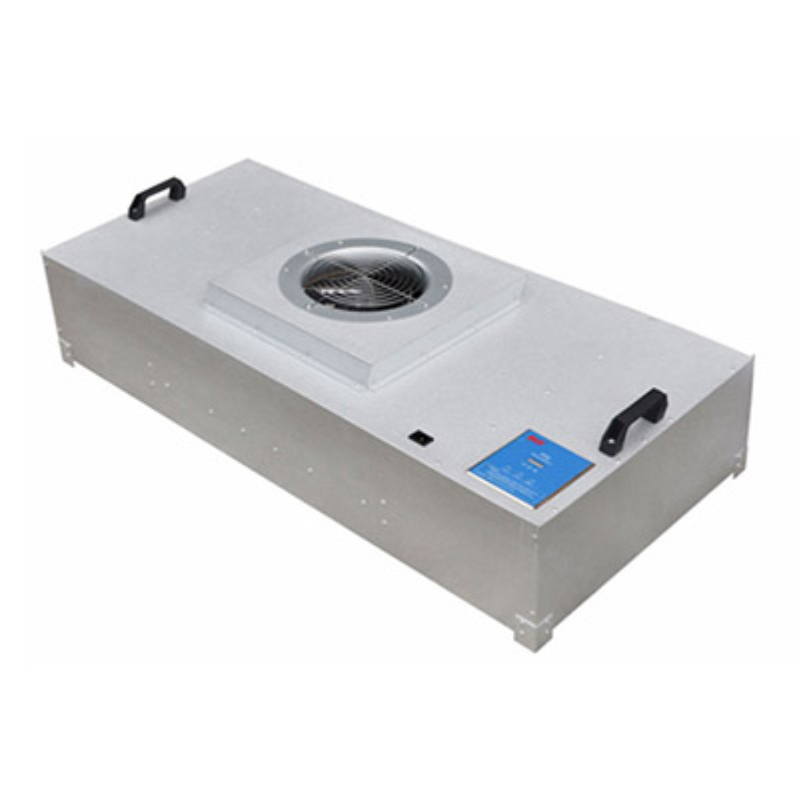
Les unités de traitement d'air (FFU) assurent le flux d'air. Plus il y a de FFU, plus le débit d'air total est élevé, et donc plus le taux de renouvellement d'air (ACH) est élevé.
6. Les bouches de reprise d'air ont-elles une incidence sur le calcul du ACH ?
Le calcul est basé sur fournir L'air. Cependant, les bouches de reprise d'air doivent être dimensionnées pour gérer le même volume afin d'éviter une surpression.
7. La hauteur du plafond a-t-elle une importance ?
Oui. Un plafond plus haut augmente le volume de la pièce, ce qui nécessite un débit d'air total plus important pour atteindre le même taux de renouvellement d'air (ACH) qu'avec un plafond plus bas.
8. Puis-je réduire l'ACH pendant la nuit ?
Oui. C'est ce qu'on appelle le « mode nuit » ou la « réduction de la fréquence de renouvellement d'air ». De nombreux laboratoires réduisent leur taux de renouvellement d'air de 50 % lorsqu'ils sont inoccupés afin d'économiser de l'énergie tout en maintenant une pression positive.
Maîtrisez les calculs pour salles blanches. Utiliser Calculateur ACH en ligne de KLC ou Demander une proposition de conception personnalisée.



 Réseau IPv6 pris en charge