Bien que la douche d'air et le sas de transfert soient tous deux essentiels au contrôle de la contamination en salle blanche, ils ont des fonctions différentes. La douche d'air assure le contrôle du personnel, utilisant un flux d'air à haute vitesse pour éliminer les particules présentes sur les vêtements. Le sas de transfert, quant à lui, assure le contrôle des matériaux, permettant le transfert de marchandises sans déplacement de personnel. Choisir la bonne combinaison est essentiel pour la conformité aux BPF et l'efficacité opérationnelle. Voici un comparatif définitif.
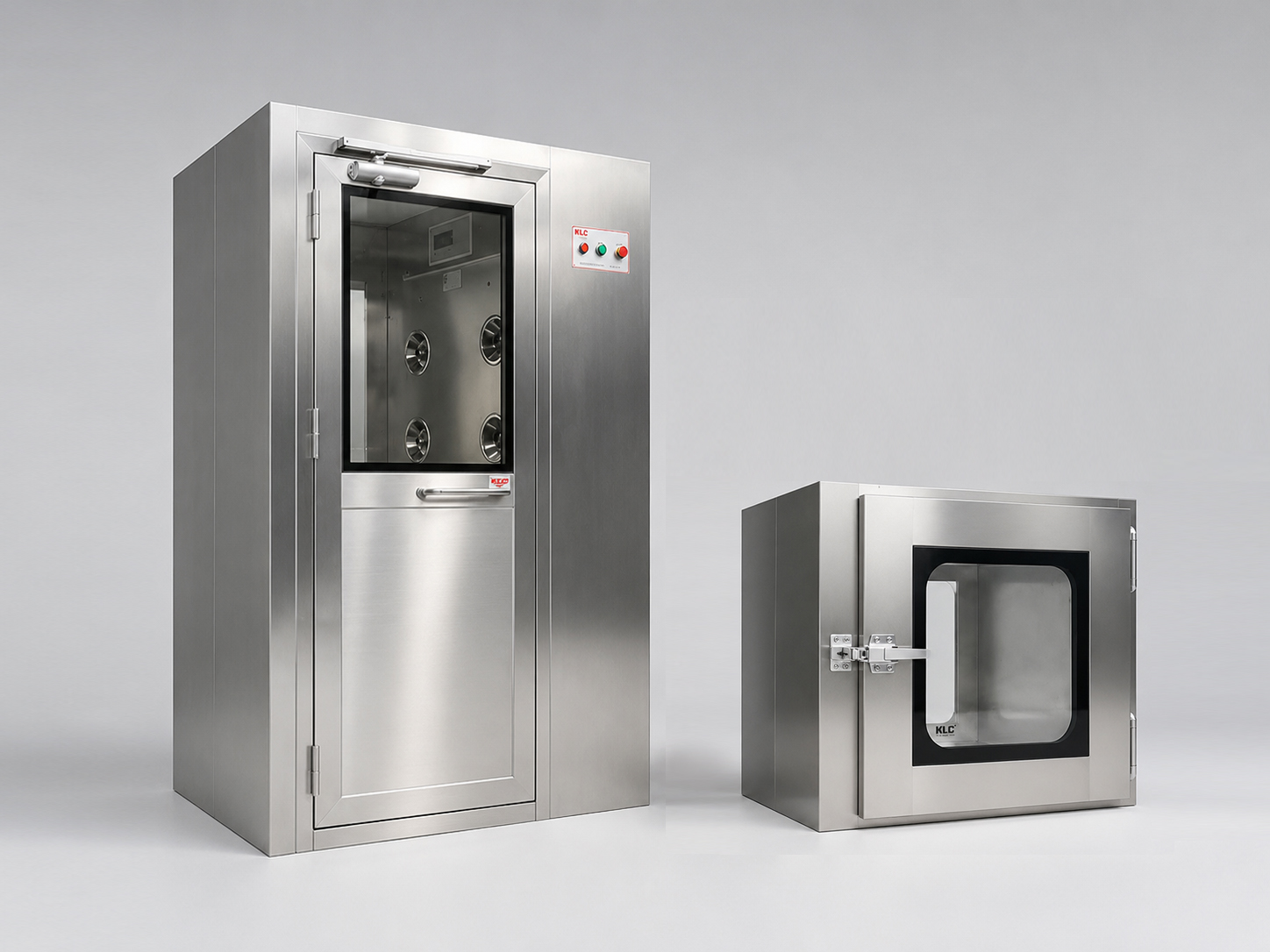
Comparaison côte à côte
Fonctionnalité | Douche d'air | Boîte de passage |
Objectif principal | Décontamination du personnel | Transfert de matériaux |
Principe de fonctionnement | Jet d'air de 20 à 25 m/s « Nettoyage » | Barrière physique / Purge HEPA |
Site d'installation | Entre les vestiaires et la salle blanche | Entre les salles de niveaux différents |
Temps de séjour | 10 à 20 secondes | Instantané (statique) / 3-5 min (dynamique) |
Rôle des BPF | Réduit la charge microbienne sur les blouses | Prévient la contamination croisée |
Coût typique (USD) | 2 500 $ – 6 000 $ | 400 $ – 2 000 $ |
Besoins en énergie | Haute pression (Souffleurs haute pression) | Faible (statique) / Modéré (dynamique) |
Quand utiliser Which ?
1. Douche d'airObligatoire pour le personnel entrant dans les zones ISO 6 ou plus propres. Cela permet une « réinitialisation » psychologique et physique des employés, en garantissant qu’ils portent une tenue appropriée et que leur toilette est propre avant d’entrer.
2. Boîte de passageObligatoire dans toute salle blanche (ISO 5 à 8). Le transfert de matériel par sas réduit le nombre d'entrées et de sorties du personnel, principale source de contamination.
3. Boîte de passe dynamique vs. statique: En cas de transfert entre une zone non propre et une zone propre, utilisez un Boîte de passage dynamique (avec son propre système de filtration HEPA). En cas de transfert entre deux zones propres de même catégorie, un Boîte de passage statique est suffisant.

4 avantages synergiques de l'utilisation des deux
FAQ : Foire aux questions
1. Quelle est la différence entre une douche d'air et un sas de passage ?
Une douche de décontamination est destinée aux personnes ; un sas de transfert est destiné aux objets. Les douches de décontamination utilisent de l'air à grande vitesse ; les sas de transfert sont généralement des sas statiques (sauf s'ils sont dynamiques).
2. Ai-je besoin à la fois d'une douche d'air et d'un sas de transfert ?
Oui. Dans presque toutes les salles blanches professionnelles (pharmaceutiques, semi-industrielles, laboratoires), il faut un accès pour les personnes et un accès séparé pour les matériaux afin de respecter les normes ISO.
3. Quelle vitesse de vent est nécessaire pour une douche d'air ?
Pour une élimination efficace des particules, une vitesse de buse d'au moins 20 à 25 m/s est requise. Les unités KLC atteignent généralement 22 à 25 m/s.
4. Combien de temps doit durer un cycle de douche d'air ?
La norme industrielle est de 10 à 15 secondes. Les cycles inférieurs à 10 secondes sont généralement inefficaces pour éliminer les poussières fines.
5. Qu'est-ce qu'une boîte de passe dynamique ?
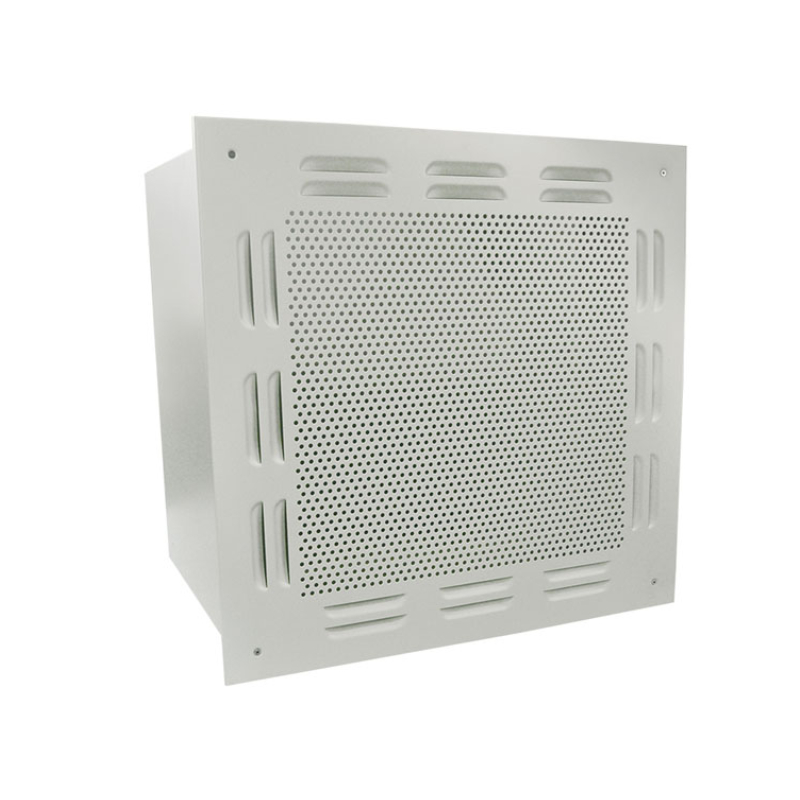
Un sas de transfert dynamique est équipé d'un ventilateur intégré et d'un filtre HEPA pour purifier activement l'air à l'intérieur du sas et maintenir une pression supérieure à celle des pièces environnantes.
6. Un sas de transfert a-t-il besoin d'une filtration HEPA ?
Uniquement s'il s'agit d'un sas dynamique utilisé pour les correspondances vers les zones de haute sécurité (catégories A/B). Les sas statiques ne comportent pas de filtres.
7. Quelles sont les exigences BPF relatives aux sas de transfert ?
Les BPF exigent que les sas de transfert soient équipés de portes à verrouillage pour empêcher leur ouverture simultanée et, dans certains cas, pour la stérilisation UV ou la purge HEPA.
8. Un sas de passage peut-il remplacer une douche d'air ?
Non. Il est impossible de faire passer une personne à travers un sas de transfert, et le passage de matériaux volumineux à travers une douche d'air est inefficace et peut endommager les buses.
9. À quelle fréquence faut-il nettoyer les buses des douches d'air ?
Mensuellement. Les buses peuvent accumuler de la poussière au fil du temps, ce qui réduit la vitesse de l'air et peut entraîner une « recontamination ».
10. Quel est le coût typique d'une douche d'air par rapport à un sas de transfert ?
Une douche de décontamination standard coûte entre 3 000 et 5 000 $. Un sas de décontamination statique standard coûte entre 500 et 800 $, tandis qu’un sas dynamique peut coûter entre 1 500 et 2 000 $.
Optimisez le trafic dans votre salle blanche.
Voir Modèles de sas et de douches de sécurité de KLC ou Demander un devis pour des dimensions personnalisées.



 Réseau IPv6 pris en charge