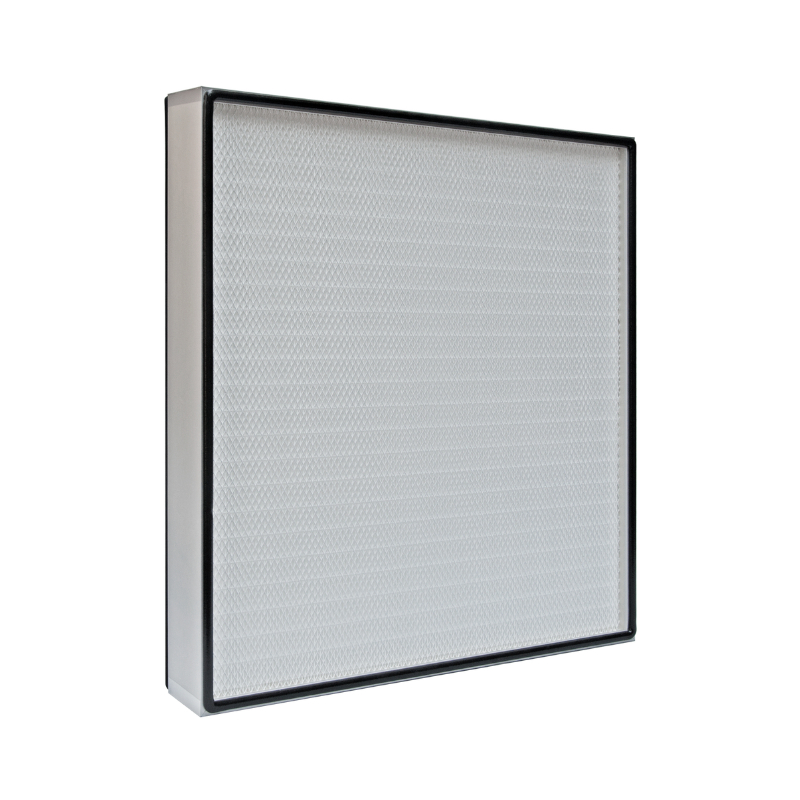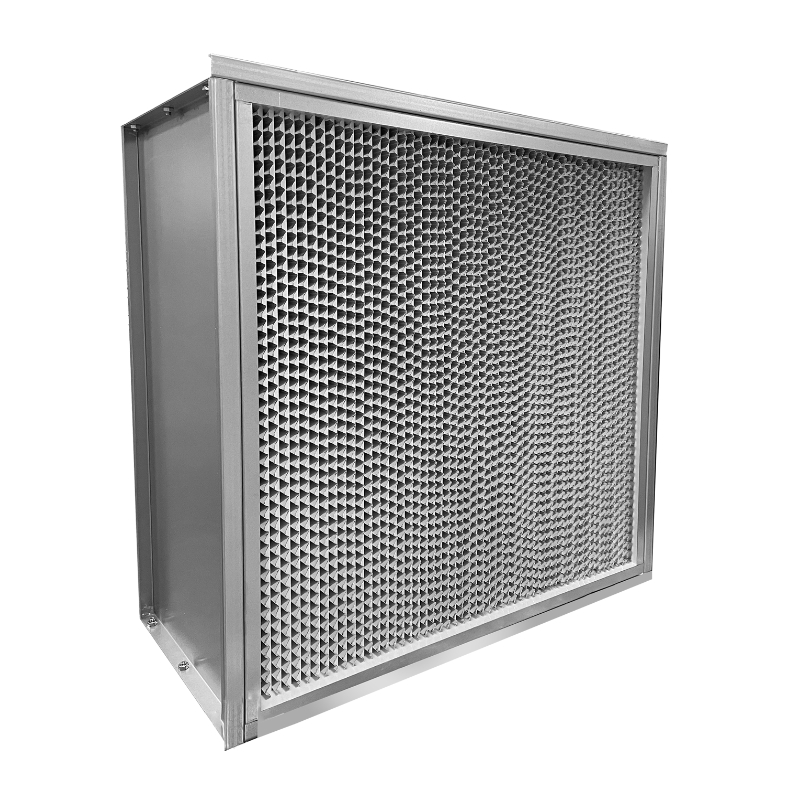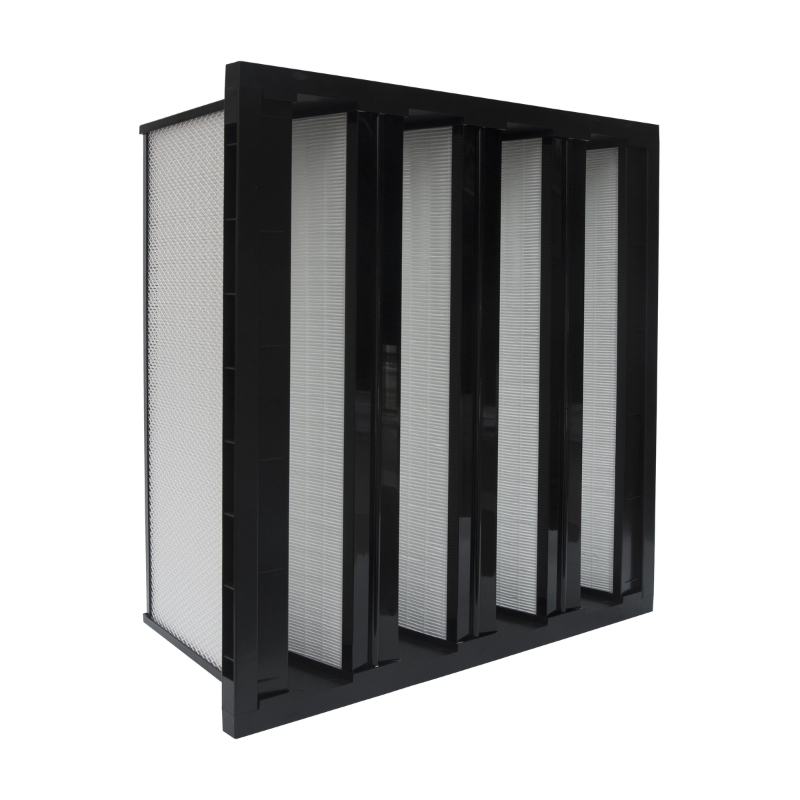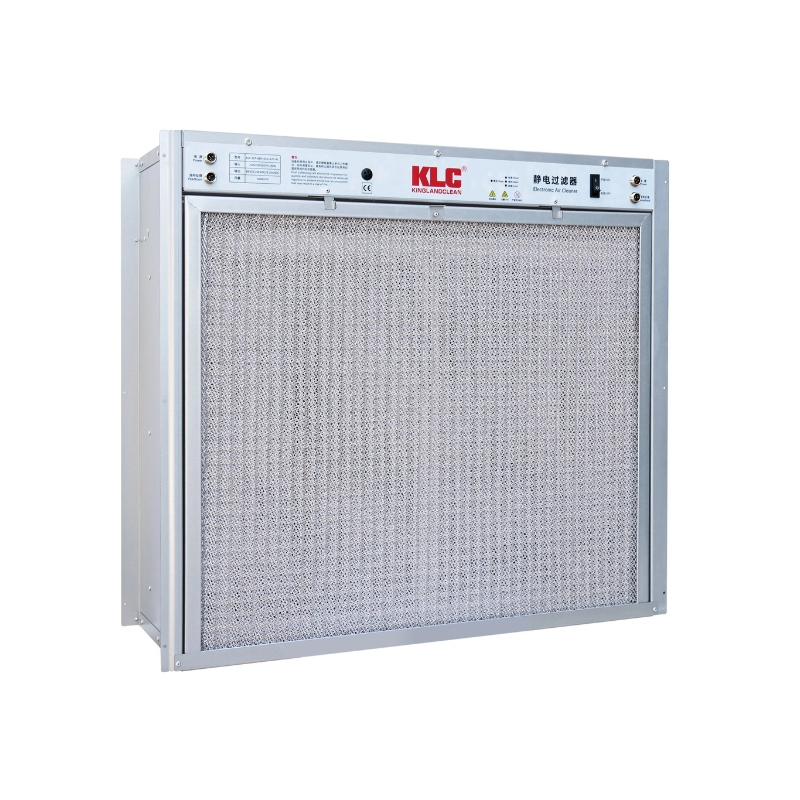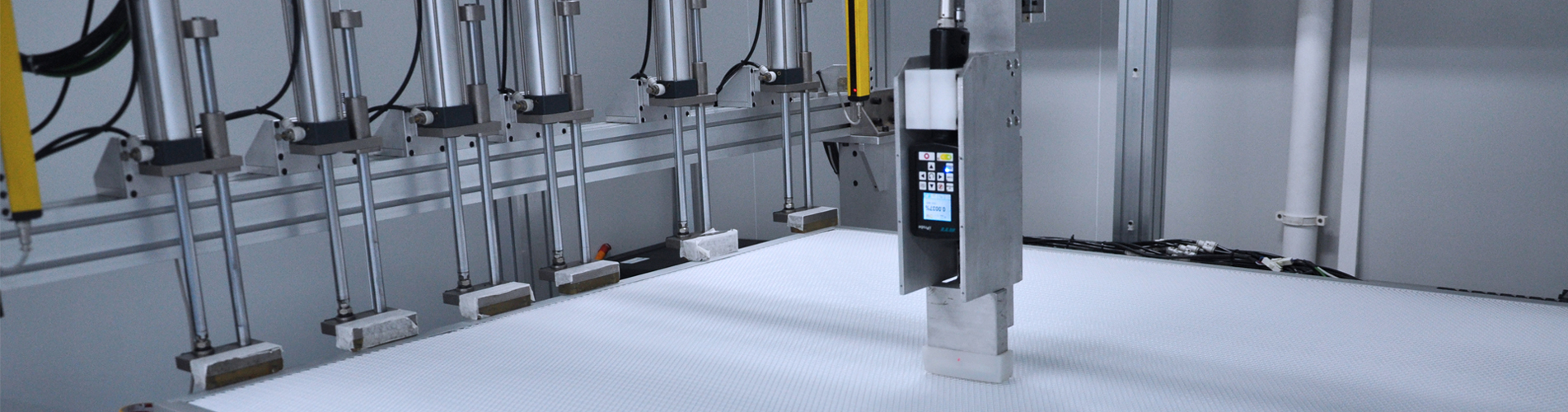
Les filtres HEPA haute température utilisent des fibres de verre borosilicatées spéciales, des cadres en acier inoxydable et des mastics inorganiques pour obtenir une filtration d'air de qualité salle blanche (efficacité de 99,97 % à 99,99 %) sous des charges thermiques soutenues de 250 °C à 350 °C, là où les filtres à liant organique standard échoueraient.
Filtres HEPA standard Ils sont conçus pour fonctionner à température ambiante ou proche de celle-ci (généralement jusqu'à 80 °C). Exposés à des températures supérieures à 120 °C, les composants principaux des filtres HEPA standard se détériorent rapidement en raison de limitations structurelles et chimiques.
Fusion et dégazage des liants organiques : Les médias filtrants standard en fibre de verre utilisent des liants organiques (comme les résines acryliques) pour lier les fibres et assurer leur résistance à la traction. À haute température, ces liants se décomposent, libérant des vapeurs chimiques (dégazage), générant de la fumée et fragilisant le papier filtre, ce qui entraîne l’apparition de micro-perforations et de déchirures.
Dégradation du mastic polyuréthane : Les filtres HEPA standard sont fixés à leur cadre à l’aide d’adhésifs en polyuréthane ou en silicone. À des températures supérieures à 100 °C, ces mastics fondent, se liquéfient et se carbonisent, créant ainsi des voies de fuite et libérant d’importantes quantités de particules polluantes en aval.
Dilatation thermique et déformation du cadre : Les cadres HEPA standard sont souvent fabriqués en aluminium anodisé ou en acier galvanisé. L’aluminium possède un coefficient de dilatation thermique élevé. Dans les fours à haute température, la dilatation thermique inégale entre le cadre métallique, le média filtrant en fibres de verre et le joint d’étanchéité provoque une déformation importante, voire une rupture catastrophique du joint.
Pour pallier ces défaillances, les filtres HEPA haute température utilisent des composants spécifiques résistants à la chaleur. Le média filtrant est composé de fibres de verre borosilicaté de haute qualité, avec un minimum de liants ou des liants inorganiques. Le cadre est fabriqué en acier inoxydable (tel que SUS304 ou SUS316), qui offre une résistance mécanique supérieure et une faible déformation thermique. Le joint d'étanchéité est remplacé par des matériaux céramiques inorganiques spécifiques ou par un silicone haute performance résistant aux hautes températures, qui reste stable et étanche aux gaz même à haute température.
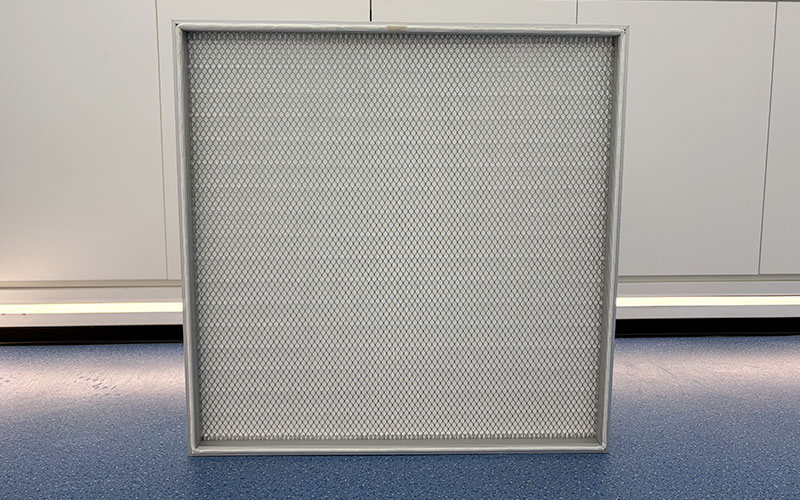
Pour sélectionner la bonne réponse filtre HEPA haute température, il est essentiel de comprendre en quoi les spécifications des matériaux diffèrent entre les classes de performance 250 °C et 350 °C.
Paramètre technique | Filtre HEPA haute température de qualité 250 °C/260 °C | Filtre HEPA haute température de 350 °C |
Température maximale de fonctionnement | 250 °C à 260 °C en continu | 350 °C en continu (pics jusqu'à 400 °C) |
Matériau du cadre | Acier inoxydable SUS304 ou acier galvanisé | Acier inoxydable SUS304 ou SUS316 |
Type de mastic | Silicone rouge haute température ou céramique inorganique | Mastic céramique inorganique spécial / Mastic vitreux |
Matériau séparateur | Feuille d'aluminium ondulée | Feuille d'aluminium ondulée (avec bords repliés) |
Matériau du joint | Caoutchouc silicone haute température ou PTFE | corde en fibre de verre ou fibre céramique ultra-haute température |
Efficacité de filtration (EN 1822) | H13 (≥99,95 %) ou H14 (≥99,995 % au MPPS) | H13 (≥99,95 %) ou H14 (≥99,995 % au MPPS) |
Résistance initiale (au débit d'air nominal) | ~220 Pa à 250 Pa | ~250 Pa à 280 Pa |
Classeur de médias | Liant organique à faible émission de fumée ou liant inorganique | 100 % sans liant ou avec liant inorganique spécialisé |
Sensibilité au cycle thermique | Modéré ; permet des vitesses de montée en température standard (par exemple, 2-3 °C/min) | Élevée ; nécessite une montée en température contrôlée (par exemple, 1 à 2 °C/min) |
Applications industrielles principales | Fours de séchage industriels, cabines de peinture, fours à batteries | Tunnels de dépyrogénation, stérilisateurs pharmaceutiques |
Lors du déploiement de filtres HEPA haute température, le choix doit être adapté aux exigences thermiques et de propreté spécifiques du processus industriel :
Tunnels de dépyrogénation pharmaceutique : Ces systèmes nécessitent une stérilisation à chaleur sèche des flacons et ampoules en verre à des températures généralement comprises entre 300 °C et 350 °C afin de détruire les pyrogènes. Le filtre de classe 350 °C, avec cadre en acier inoxydable SUS316 et joint céramique inorganique, est obligatoire. L’acier inoxydable SUS316 prévient la corrosion due aux agents désinfectants corrosifs et à l’oxydation à haute température, tandis que les joints inorganiques empêchent le dégazage chimique susceptible de contaminer l’emballage pharmaceutique.
Fours industriels et tunnels de séchage : Pour les procédés de séchage utilisés dans la fabrication de produits électroniques, la production de batteries et les cabines de peinture automobile fonctionnant entre 150 °C et 250 °C, le filtre de classe 250 °C est la solution la plus économique. Il offre un bon compromis entre durabilité thermique et facilité d’installation, grâce notamment à l’utilisation fréquente de joints en silicone rouge haute température qui assurent une excellente élasticité et absorbent les variations de température dues à la dilatation thermique cyclique.
Vitesses de montée et de descente en température : La durée de vie d’un filtre haute température dépend fortement de la rapidité des variations de température. Les cycles thermiques rapides entraînent une dilatation différentielle, fragilisant l’adhérence entre le mastic et le média filtrant. Pour les applications à 350 °C, les vitesses de montée et de descente en température doivent être strictement contrôlées entre 1 °C et 2 °C par minute afin d’éviter toute fissuration structurelle.
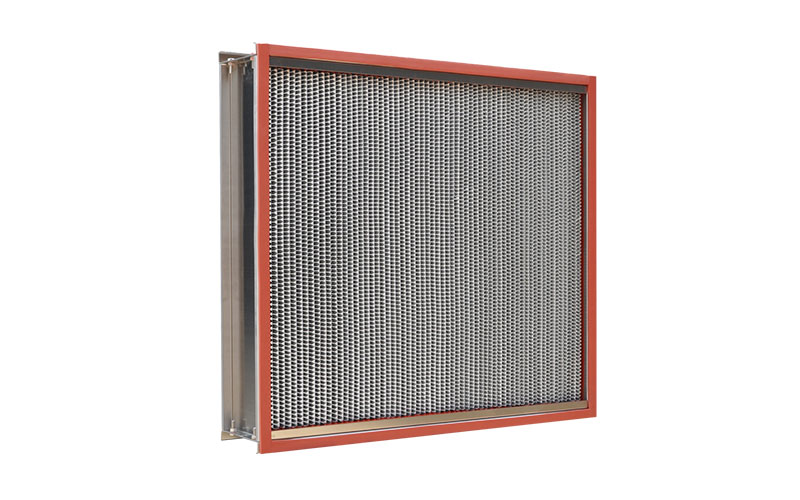
Spécialisée dans la fabrication de filtres à air résistants à la chaleur, KLC propose la gamme de filtres HEPA séparateurs haute température KLC 260 °C / 350 °C. Conçus avec des cadres en acier inoxydable SUS304 ou SUS316, ces filtres utilisent des séparateurs en aluminium ondulé spécifiques pour maintenir un espacement précis des plis, même sous fortes contraintes thermiques. Ils sont scellés avec un adhésif céramique inorganique de haute pureté (pour la version 350 °C) et sont dotés de joints en fibre de verre de qualité supérieure. Les filtres KLC sont certifiés conformes aux normes EN 1822 H13 et H14, garantissant une filtration fiable et sans fuite pour les applications exigeantes de dépyrogénation pharmaceutique et les fours de séchage industriels de haute qualité.
Lors du premier chauffage des filtres HEPA haute température, un léger dégagement de fumée ou de composés chimiques est normal. Ce phénomène est dû à la polymérisation thermique de traces de liants organiques dans le média filtrant en fibres de verre ou de résidus organiques dans le mastic. Afin d'éviter toute contamination de la zone de production, le filtre doit subir un cycle de préchauffage (augmentation progressive de la température) dans un environnement ventilé par extraction avant le démarrage de la production.
Oui, un filtre HEPA de haute qualité supportant 250 °C peut fonctionner en continu à cette température, à condition que le système de chauffage dispose d'une régulation précise et ne subisse pas de variations brusques. Cependant, un fonctionnement continu à la limite maximale absolue réduit la durée de vie du mastic et des joints. Pour un fonctionnement continu à proximité de 250 °C, avec des fluctuations potentielles, il est recommandé, par mesure de sécurité, d'opter pour un filtre supportant 350 °C.
La dilatation thermique peut compromettre l'étanchéité du filtre si des matériaux aux coefficients de dilatation différents sont utilisés. À 350 °C, les cadres en acier inoxydable se dilatent considérablement. Si le cadre ou le boîtier ne permet pas cette dilatation, ou si le joint manque d'élasticité, des fuites se produiront. Les filtres de haute qualité utilisent des joints en fibre de verre ou en céramique, associés à des mécanismes de serrage robustes à ressort, afin de maintenir une pression constante malgré les variations de température.
Les filtres EN 1822 H13 présentent une efficacité minimale de 99,95 % à la taille de particule la plus pénétrante (MPPS), tandis que les filtres H14 atteignent 99,995 %. Dans les applications à haute température, comme la dépyrogénation pharmaceutique, les filtres H14 sont privilégiés car ils constituent une barrière stérile garantissant l'absence de transmission microbienne ou pyrogène. Pour le séchage industriel standard ou la fabrication de batteries, où la stérilisation n'est pas requise, les filtres H13 offrent un contrôle particulaire suffisant avec une perte de charge plus faible.
Dans les industries réglementées comme l'industrie pharmaceutique, les filtres HEPA haute température doivent subir des tests d'intégrité (tels que le test de balayage des aérosols DOP ou PAO) au moins deux fois par an. Étant donné que les cycles thermiques accélèrent la dégradation des mastics et des joints, des tests plus fréquents (trimestriels) sont recommandés pour les filtres exposés à des cycles quotidiens rapides de chauffage et de refroidissement.
Non, les filtres HEPA haute température ne peuvent être ni lavés ni nettoyés. Le média filtrant en fibres de verre borosilicaté est extrêmement fragile ; l’exposition à l’eau ou un frottement mécanique risque de briser les fibres et de détruire la matrice filtrante. Toute accumulation de poussière doit être gérée par une préfiltration adéquate en amont, et une fois que le filtre atteint sa limite de perte de charge, il doit être remplacé.
L'aluminium a un point de fusion plus bas (environ 660 °C) et subit une perte importante de résistance mécanique ainsi qu'une forte dilatation thermique à des températures supérieures à 200 °C. L'acier inoxydable (SUS304 ou SUS316) conserve sa rigidité structurelle, résiste à la déformation thermique et ne s'oxyde pas et ne libère pas de particules métalliques à 350 °C, ce qui en fait le seul choix fiable pour les environnements stériles à haute température.
Les variations rapides de température génèrent un choc thermique, provoquant une dilatation ou une contraction inégale du cadre en acier inoxydable et du média filtrant en fibres de verre. Ce mouvement différentiel fragilise le joint inorganique, entraînant des fissures et des fuites. Maintenir une vitesse de montée en température et de refroidissement rigoureuse de 1,5 °C à 2 °C par minute est la méthode la plus efficace pour optimiser la durée de vie des filtres HEPA haute température.
Choisir le bon filtre HEPA haute température est une décision cruciale qui influe directement sur la sécurité des produits et la fiabilité du système. Pour les procédés stériles exigeants fonctionnant à plus de 250 °C, un filtre de classe 350 °C avec un cadre en acier inoxydable et un joint en céramique inorganique est indispensable. Pour obtenir les spécifications détaillées du produit, les dimensions sur mesure et l'assistance technique concernant la filtration pour salles blanches résistantes à la chaleur, contactez KLC International.https://www.klcintl.com/.



 Réseau IPv6 pris en charge